Secure Authentication Suite and Email Security Suite Deliver Stronger Identity Protection and Business Communication Security
Organizations today operate in increasingly connected environments where employees access applications, cloud services, and corporate data from multiple locations and devices. While this flexibility improves productivity, it also expands the potential attack surface for cybercriminals. As a result, security experts continue to recommend stronger identity verification and communication protection as core elements of any modern cybersecurity strategy.
A Secure Authentication Suite is widely regarded as an effective way to reduce the risks associated with traditional password-based access. Rather than relying solely on passwords, modern authentication solutions use technologies such as digital certificates, cryptographic verification, biometrics, and trusted devices to validate user identities. This approach helps protect organizations against common attacks, including phishing, credential theft, password reuse, and unauthorized access.
Beyond improving security, a Secure Authentication Suite also enhances the user experience. Employees benefit from faster, password-less access to enterprise applications, workstations, and cloud services, while IT teams spend less time handling password resets and access-related support requests. This balance of security and convenience makes strong authentication increasingly valuable for organizations of all sizes.
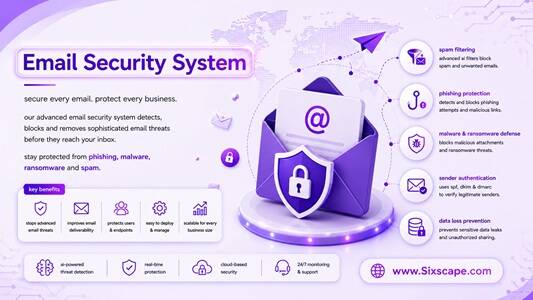
Equally important is the protection of business communications. Email remains one of the primary channels for exchanging confidential information, making it a frequent target for phishing campaigns, spoofing attempts, malware delivery, and data interception. Sixscape's advanced Email Security Suite helps organizations address these risks by securing messages, verifying sender identities, and protecting sensitive information during transmission.
Many organizations are now adopting integrated security strategies that combine identity protection with communication security. By deploying both a Secure Authentication Suite and an Email Security Suite, businesses can establish stronger access controls while protecting one of their most critical communication channels. This layered approach improves resilience against evolving cyber threats and supports broader zero-trust security initiatives.
For businesses operating in sectors such as healthcare, finance, government, manufacturing, and enterprise IT, these technologies also contribute to stronger governance and regulatory compliance. Secure authentication and encrypted communications help organizations protect sensitive information while maintaining confidence in their digital operations.
--------------------------------------------------------------------------------------------------------------------------------------------------------------------------------
Password-less Authentication and Secure Email Encryption Service for Modern Enterprise Security and Communication
Cyber criminals continue to target user credentials and business communications as primary entry points into enterprise networks. Traditional passwords are often vulnerable to phishing attacks, credential theft, password reuse, and human error. At the same time, unsecured email communications can expose sensitive information to unauthorized access and interception. As a result, organizations are increasingly adopting Password-Less Authentication and secure email encryption technologies to strengthen their overall cybersecurity posture.
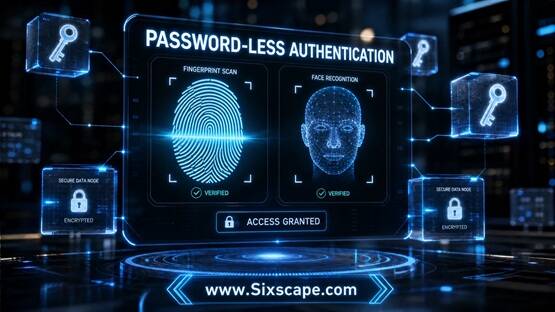
Password-less authentication eliminates the need for users to create, remember, and manage passwords. Instead, users are verified through trusted devices, digital certificates, biometrics, and cryptographic authentication methods. This approach significantly reduces the risks associated with stolen credentials while creating a simpler and more secure login experience.
By removing passwords from the authentication process, organizations can reduce help desk requests related to password resets, improve employee productivity, and minimize opportunities for attackers to exploit weak or compromised credentials. Password-less authentication also supports modern zero-trust security strategies by ensuring that every access request is verified using strong identity validation.
While secure access is essential, protecting communication channels is equally important. Email remains one of the most widely used business tools, making it a common target for cyber threats such as phishing, spoofing, malware delivery, and data theft. A Secure Email Encryption Service helps protect sensitive communications by ensuring that only authorized recipients can view encrypted messages and attachments.
Email encryption safeguards confidential business information during transmission, preventing unauthorized individuals from accessing sensitive content. This level of protection is especially important for organizations handling customer data, financial records, legal documents, healthcare information, and other confidential business communications.
Sixscape combines strong authentication technologies with secure communication solutions to help organizations create a more resilient security framework. By integrating password-less authentication and secure email encryption service capabilities, businesses can strengthen identity protection while securing critical communication channels across their enterprise environment.
--------------------------------------------------------------------------------------------------------------------------------------------------------------------------------
Strengthening Cyber Defense with Private Key Secure Authentication and IoT Device Security
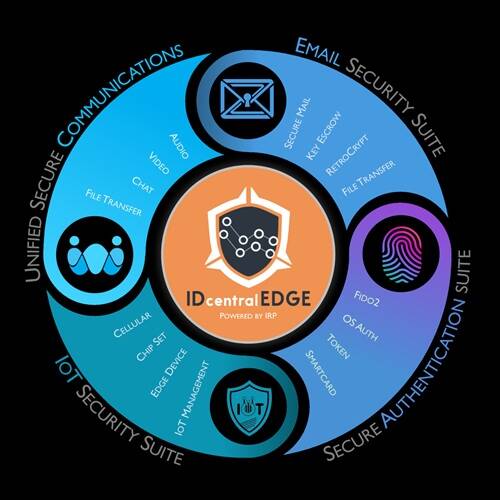
In the modern digital landscape, enterprises rely heavily on connected systems, cloud platforms, and smart devices to operate efficiently. However, this increased connectivity also introduces new security challenges. Cybercriminals often exploit weak authentication systems and vulnerable devices to gain unauthorized access to corporate networks. To address these risks, organizations are turning to advanced security approaches such as Private Key Secure Authentication and IoT Device Security.
Private Key Secure Authentication is a powerful method for verifying digital identities using cryptographic keys rather than traditional passwords. In this model, users or devices possess a private key that is used to authenticate their identity securely. Because the private key remains confidential and cannot be easily replicated, this approach significantly reduces the risk of credential theft, phishing attacks, and unauthorized system access.
Unlike password-based systems, private key authentication relies on cryptographic verification processes that ensure only authorized users or devices can access sensitive resources. Platforms such as Sixscape leverage this technology to provide Private Key Secure Authentication, making it particularly useful for enterprises managing remote workforces, cloud-based applications, and large digital infrastructures. By implementing Private Key Secure Authentication through solutions like Sixscape, organizations can strengthen identity protection and maintain secure access across their systems.
At the same time, the growing number of connected devices has made IoT Device Security a critical component of enterprise cybersecurity strategies. From smart sensors and industrial machinery to healthcare devices and connected infrastructure, IoT devices are now widely deployed across industries. Without proper security controls, these devices can become entry points for cyber attackers.
IoT Device Security focuses on protecting devices through secure onboarding, encrypted communication, and continuous monitoring. Each device must be authenticated before joining the network, ensuring that only trusted devices are allowed to transmit data. Digital certificates and Public Key Infrastructure (PKI) are often used to assign unique identities to devices, preventing unauthorized access or malicious activity.
--------------------------------------------------------------------------------------------------------------------------------------------------------------------------------
Why Email Security and IoT Security Are Essential for Enterprise Cyber Resilience

In today’s digital-first environment, enterprises face growing threats targeting two of their most vulnerable surfaces: email systems and connected devices. Strengthening Email Security and IoT Security is no longer optional—it is a strategic necessity for business continuity, regulatory compliance, and operational stability.
Email remains the most widely used business communication channel, making it a primary target for phishing, spoofing, ransomware, and Business Email Compromise (BEC) attacks. Effective Email Security goes beyond spam filtering and basic firewalls. It requires digital signing, end-to-end encryption, certificate-based authentication, and strict identity validation controls. By implementing PKI-driven frameworks and S/MIME encryption, organizations can ensure that emails are confidential, tamper-proof, and verifiably authentic.
Technology providers such as Sixscape Communications Pte. Ltd. are focused on strengthening secure communications through certificate lifecycle automation and cryptographic authentication. Their approach emphasizes eliminating password-based vulnerabilities and replacing them with strong digital identity models that protect enterprise messaging environments at scale.
At the same time, the rapid expansion of connected devices has amplified the need for robust IoT Security. From industrial IoT systems and smart infrastructure to healthcare and logistics devices, every connected endpoint represents a potential attack vector. Without secure onboarding, cryptographic device identity, encrypted communication channels, and centralized certificate visibility, rogue devices can infiltrate networks and compromise sensitive data.
A strong IoT Security strategy relies on PKI-based authentication, automated certificate management, real-time monitoring, and strict access governance. Ensuring that every device has a unique and verifiable digital identity significantly reduces the risk of unauthorized access and large-scale network breaches.
Organizations that integrate both Email Security and IoT Security into a unified cryptographic trust architecture position themselves for long-term resilience. By adopting certificate-based security frameworks and automated identity management, enterprises can confidently scale digital operations while staying prepared for evolving cyber threats — including emerging post-quantum security challenges.